Best Time to Visit Victoria BC: A Month-by-Month Guide (2026)
Victoria keeps a different calendar from the rest of coastal British Columbia. It sits in a rain shadow, its summers stay mild rather than hot, and its three best experiences (whales, gardens in bloom, gardens in lights) each peak in a different part of the year.
At a glance: June through September is the most reliable stretch: dry weather, long evenings, the whale season at full strength and every operator running.

Victoria's real seasons, on one calendar
Season windows compiled from the whale-watching operator's own stated April to October season and the Butchart Gardens published 2026 season calendar. Ferry and hotel pressure reflects the summer peak on the Tsawwassen to Swartz Bay route. Check the operators' own listings for exact dates.
When is the best time to visit Victoria BC?
June through September is the most reliable stretch: dry weather, long evenings, the whale season at full strength and every operator running. May, and the run from mid September into mid October, buy almost the same access for less money and far fewer people. December is its own separate case, built around the lit gardens rather than the weather.
The confusion around this question comes from treating Victoria as one season. It has four calendars stacked on top of each other, and they do not line up. Weather peaks in July and August. Whales run from April to October. Garden admission is at its most expensive from June 1 to September 15 and at its cheapest in October and November. Travel pressure, meaning ferry queues and hotel rates, spikes for about ten weeks from late June.
Pick your date by which of those four matters most to you, and the answer stops being vague. A photographer chasing bulbs wants late April. A family chasing orcas wants July. Someone who mostly wants to walk a pretty city without queueing for anything wants the first half of October, and will pay noticeably less for the privilege.
| Window | Weather | Crowds | Whales | Gardens | Our verdict |
|---|---|---|---|---|---|
| January to February | Coolest and wettest, short days | Lowest of the year | Season closed | Cheapest, but closed Jan 18-31 | City-only trips and quiet weekends |
| March to April | Mild, changeable, bulbs arriving | Light, building at Easter | Opens in April | Spring pricing begins, strong bulb display | Excellent value if you can take rain |
| May | Reliably mild, long light returning | Moderate | Running, cooler water | Peak bulb and early rose season | The best all-round month on this list |
| June to August | Warm, dry, the driest stretch of the year | Heaviest, especially August | Strongest and most settled | Peak price, late evening opening midweek | Best access, worst queues, highest cost |
| September to mid October | Still warm, softer light, first rain returning | Falls away sharply after Labour Day | Running to the end of October | Price drops after September 15 | The shrewd traveller's window |
| Late October to November | Wet, short days, properly autumnal | Very light | Closed from November | Cheapest tickets of the year | Cheap and quiet, plan indoor backups |
| December | Cold, dark by mid afternoon | Busy on weekend evenings | Season closed | Christmas Lights, 3pm to 9pm | Go for the lights, not the flowers |
One more framing that helps. Victoria is a walking city with a compact core, so weather affects the experience here more than it would somewhere you spend the day indoors. Two dry days in April beat five wet ones in November, and the shoulder months are a gamble you win more often than you lose.
What does each month actually feel like?
Summer runs warm and dry rather than hot, spring arrives early with bulbs from March, autumn turns wet from late October, and winter stays mild by Canadian standards but dark, with light gone by mid afternoon in December. No month is unvisitable. Several months are simply better value than the ones people default to.
Here is the year in plain terms, without invented temperature figures we cannot stand behind. What follows is the shape of each month for a visitor deciding when to book.
| Month | General feel | What is on | Crowds | Book ahead? |
|---|---|---|---|---|
| January | Cool, wet, short days, mild by mainland standards | Lights to Jan 6, then a two-week garden closure | Lowest | Rarely needed |
| February | Damp and quiet, first hints of early colour | Museums, food tours, ghost walks | Very low | Rarely needed |
| March | Bulbs start, changeable skies, light returning | Gardens waking up, city tours resume in force | Low | Weekends only |
| April | Genuine spring, whale season opens | First whale trips, bulb display at its peak | Moderate around Easter | Yes for whale trips |
| May | Mild, long evenings, low rain risk | Everything running, tulips and early roses | Moderate | Yes for popular tours |
| June | Warm and dry, longest days of the year | Peak garden pricing starts June 1 | Building fast | Yes, especially ferries with a car |
| July | The driest, warmest and busiest stretch begins | Full whale season, late garden evenings midweek | Heavy | Yes, book weeks out |
| August | Same weather as July, more people | Everything, at maximum demand | Heaviest | Yes, book well ahead |
| September | Warm start, softer light, crowds thin after the first week | Garden pricing drops after the 15th | Moderate, falling | Weekends only |
| October | Autumn arrives, rain returns, gardens at their cheapest | Last whale trips, Halloween ghost walks | Light | Ghost walks in late October |
| November | Wettest feeling month, gates shut at 3:30pm | Indoor city, food tours, early Christmas setup | Very light | Rarely needed |
| December | Dark early, cold, festive | Christmas Lights nightly from Dec 1 | Busy weekend evenings | Yes for December weekends |
Two months deserve a flag. April is the one people underrate: the whale season opens, the bulbs are at their loudest, and you are still paying spring rather than summer prices. November is the one people overrate as a bargain, because a 3:30pm garden closing time and a 4:30pm sunset take a real bite out of what you can fit into a day.
Is Victoria really drier than Vancouver?
Yes, meaningfully so. Victoria sits in the rain shadow of the Olympic Mountains and the Vancouver Island ranges, which strip a good deal of moisture out of Pacific systems before they reach the city. It is one of the driest and mildest places in Canada, and its summers in particular run notably dry.
That does not make it a desert. The wet season is real and it is long, running roughly from late October through March, and it rains in the way coastal rain does: often light, often persistent, rarely dramatic. What the rain shadow changes is the odds. A grey week in Vancouver can be a bright one across the strait, and locals will tell you about it.
The practical version of this fact is about packing rather than dates. A waterproof shell earns its place in a bag any month of the year, and layering matters more than a heavy coat because the temperature swing between a sheltered street and an exposed waterfront is larger than the forecast suggests. Anyone heading out on the water feels this most: an open zodiac in June is considerably colder than a downtown pavement in June, which is why the operator hands out flotation suits and still tells people to wear warm layers underneath.
If you want the current outlook and event calendar rather than a general read, Tourism Victoria publishes both. What we can say with confidence is that the summer dry stretch here is one of the most dependable on the Canadian coast, and that the shoulder months are far better than their reputation.
When is whale-watching season in Victoria?
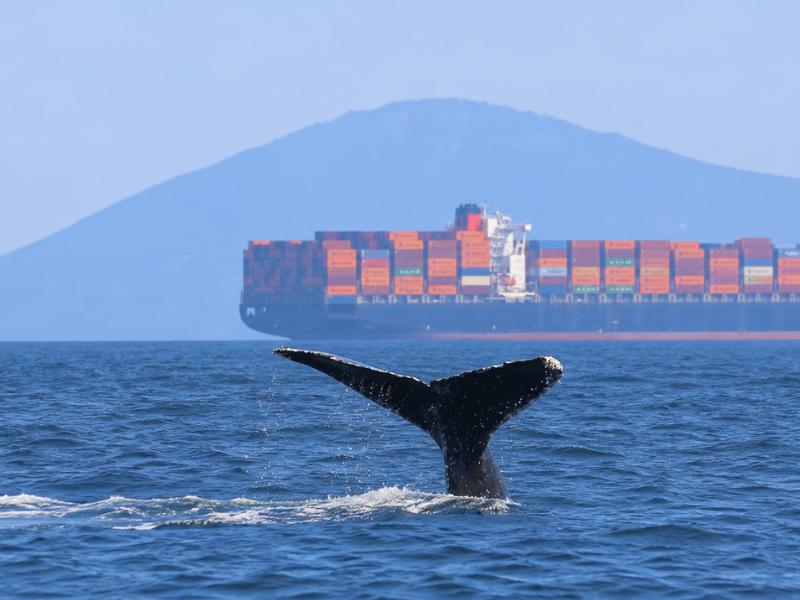
The season runs roughly April through October, and the operator we work with reports a success rate above 95% across that window. Orcas, humpbacks, minke and gray whales all appear in the Salish Sea during the season, along with seals, porpoises and seabirds. Trips do not run through the winter.
Within the season there are gradations rather than a single best week. Spring brings the first arrivals and cooler, sometimes choppier water. Midsummer usually offers the calmest conditions and the longest daylight, which matters when a sighting happens at the far end of the run. Late summer into early autumn carries strong activity with fewer boats around, and the last trips of October can be excellent if you dress for it.
The vessel changes the trip more than the month does. A 3-hour zodiac run on the Salish Sea puts twelve passengers in an open boat at water level, departing from Wharf Street downtown, with flotation suits provided and a free second trip if nobody sees a whale. The trade is comfort: there is no cabin, the ride is bouncy by design, and the operator is clear it does not suit pregnant travellers or anyone with back problems.
We go deeper on the timing question in our whale-watching season guide for Victoria, and the short answer version lives at what month is best for whale watching. If you are weighing whether to do it at all, our honest take on whether whale watching is worth it covers the case against as well as for.
When do Butchart Gardens look best, and what will you pay?
Late spring through midsummer is the strongest window for planting, with April and May carrying the bulbs and June through August the roses and the long light. October and November are the cheapest months to walk in. December is a different attraction entirely, lit rather than bloomed, and open only in the evenings.
Admission is priced by season rather than by a single flat rate, which is why quotes vary so much online. The hours move with the season too, and the swing is larger than most visitors expect.
| Season | Dates | Adult admission | Gate hours | What you see |
|---|---|---|---|---|
| Spring | April to May | Around $42 to $46 | Roughly 9am to 5pm | The bulb display at full strength |
| Peak summer | June 1 to September 15 | About $44 | Mon-Tue 9am-5pm, Wed-Sun 9am-10pm | Roses, summer planting, late evenings |
| Autumn | October to November | Around $29 to $37 | 9am to 4pm, narrowing to 3:30pm | Autumn colour, quiet paths |
| Christmas Lights | December 1 to January 6 | C$41.00 (Christmas 2026) | 3pm to 9pm daily, closed Dec 25 | Lit paths and trees, not flowers |
| Winter closure | January 18 to 31 | Not open | Closed entirely | Annual staff holiday |
That closure line is the one that ruins trips. Anyone building a late-January itinerary around the Gardens needs a different plan, and plenty of people only find out at the gate. Pull the exact figure and hours for your date from the Butchart Gardens official website rather than from any article, since both move through the year.
Getting there is its own problem, because the Gardens sit up on the Saanich Peninsula rather than in town. The simplest fix is the half-day city tour and gardens combo with entry included, which runs 10am and 1pm departures, keeps groups to roughly 6 to 14 travellers and allows 2.5 self-paced hours inside. Our full Butchart Gardens tickets and hours guide works through the self-drive alternative and the transit option in detail.
When is the cheapest time to visit Victoria?
Late October through March is the cheapest stretch across the board: garden admission at its lowest, the least pressure on ferries and hotels, and no need to book most tours far ahead. The best compromise between price and access is the second half of September and the first two weeks of October, when summer has just ended but almost everything is still running.
If you'd rather compare the full lineup first, Victoria BC Tours groups every tour by Best Selling, Nature and Food on one page.
Cost in Victoria is not just the ticket price. It is also what the season does to accommodation, to ferry reservations and to your ability to walk up and book something on the day.
| Window | Garden admission | Ferry and hotel pressure | Tour availability | The trade-off |
|---|---|---|---|---|
| Late June to early September | About $44, the top band | Highest of the year | Popular trips sell out days ahead | You pay peak for everything |
| Mid September to mid October | Drops after September 15 | Falls away quickly | Good, walk-ups often possible | Rain risk climbs through October |
| Late October to November | Cheapest of the year | Very light | Whale season ends, others continue | Short days, wet weather |
| December | Lights pricing, around $25 to $41 | Busy on weekend evenings | Evening tours in demand | Dark by mid afternoon |
| January to March | Low, with the Jan 18-31 closure | Lowest | Some seasonal trips paused | Least daylight, most rain |
| April to May | Around $42 to $46 | Moderate, rising into June | Whale season opens in April | Weather is a genuine gamble |
If the budget is the binding constraint, the honest advice is to shift a summer plan two or three weeks later rather than to move it to winter. A trip in the third week of September costs materially less than the same trip in the second week of August and loses almost nothing.
What can you do in one season that you cannot do in another?
Only two things are genuinely season-locked: whale watching, which runs April to October, and the Christmas Lights, which run December 1 to January 6. Everything else in Victoria operates through the year, with the weather changing the experience rather than the availability.
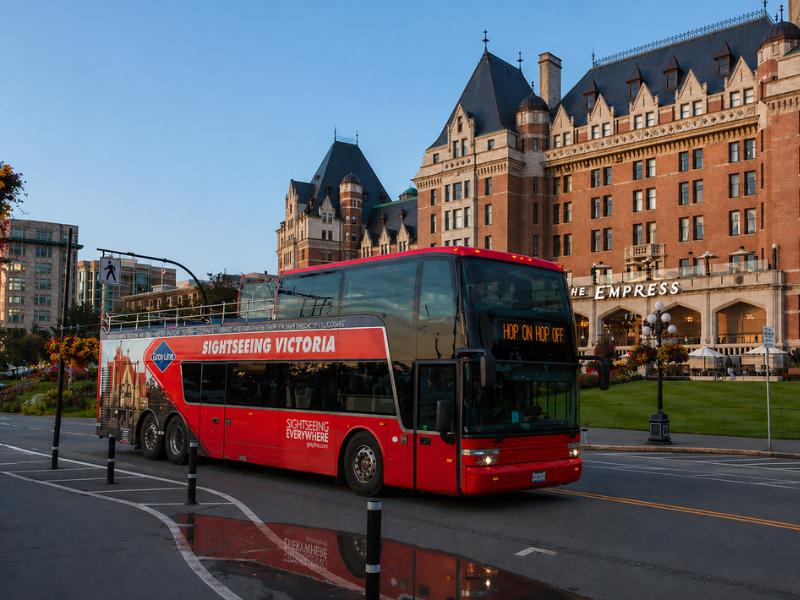
That is unusual and it works in a visitor's favour. The city's walking tours, its food tours, the ghost walk and the sightseeing bus all run in the rain, because a place with a long wet season builds its attractions to survive one.
| What you want to do | Best window | Off-season reality |
|---|---|---|
| See orcas and humpbacks | April to October | Not available outside the season |
| Walk lit gardens at Christmas | December 1 to January 6 | A completely different visit the rest of the year |
| See the gardens in full bloom | April to August | Structure and autumn colour still hold up |
| Ride an open-top sightseeing bus | Late spring to early autumn | Runs rain or shine, bring a windbreaker |
| Cycle the neighbourhoods | May to September | Possible year-round, wetter and windier |
| Take an evening ghost walk | Year-round, best in autumn | Dark comes early in winter, which suits it |
| Zipline through rainforest canopy | Spring to autumn | Weather dependent, check the listing for your date |
| Eat your way through Chinatown | Any month | Entirely indoor-friendly, ideal in November |
The ghost walk is the clearest example of a tour that improves as the weather worsens. It runs after dark through the Old Town and finishes in Bastion Square, and a damp October night does more for the atmosphere than a bright July evening ever will. Our guide to things to do in Victoria after dark covers the winter evening options in more detail.
Which month should you pick for your kind of trip?
Match the month to the trip rather than to the weather report. Families and first-timers do best in July and August. Garden lovers want late April or May. Whale-first travellers should target June through September. Anyone chasing value should book the second half of September, and anyone who wants an empty city should come in February.
| If you are | Pick | Why |
|---|---|---|
| A family with school-age children | July or August | Warmest, driest, everything open, longest evenings |
| Chasing peak flowers | Late April to early June | Bulbs then roses, before the price and crowd peak |
| Here mainly for whales | June to September | Calmest water and the most settled conditions |
| Watching the budget | Mid September to mid October | Prices drop, access barely does |
| After a quiet city break | February or November | Nothing sells out and the streets are yours |
| Coming for the Christmas Lights | Early December, midweek | Weekend evenings are the busiest of the winter |
| Doing a single day from Vancouver | May to September | More sailings and more daylight to work with |
| A photographer | May or October | Softer light, thinner crowds, strong colour both ends |
Whatever month you land on, the shape of the trip matters as much as the date. Our 2 and 3 day Victoria itinerary lays out how the days stack without doubling back across the city, and how many days is enough for Victoria answers the length question directly.
How does the season change getting to Victoria?
Summer adds ferry sailings and summer fills them. Winter thins the timetable, so a missed departure costs more time. Foot passengers are fine in any season. Drivers who travel between late June and early September without a reservation risk being bumped to a later sailing, sometimes more than one.
The route that matters is Tsawwassen to Swartz Bay, a crossing of about 95 minutes, with an adult foot passenger fare of around $21 one way and a standard vehicle around $89 one way on top of the passenger fares for everyone inside it. Neither terminal is downtown, which is the detail that ruins schedules: budget four to five hours door to door rather than the 95 minutes on the timetable.
| Season | Sailing frequency | What it means for you |
|---|---|---|
| Late June to early September | Most frequent, extra sailings added | Easiest day-tripping, hardest to drive on without booking |
| April to June, September to October | Roughly hourly to every two hours | The sweet spot: decent frequency, short queues |
| November to March | Fewer sailings, wider gaps | A missed departure can cost two hours |
| Long weekends, any season | Extra sailings and extra demand | Reserve a vehicle early or walk on |
Our Vancouver to Victoria ferry guide has the full fare breakdown, the reservation rules and a comparison against the guided crossing. If you are weighing the water against the air, is it better to fly or ferry to Victoria compares them honestly.
What do people get wrong about timing a Victoria trip?
The recurring errors are all versions of one mistake: assuming a single season. Booking late January around the Gardens, expecting whales in March, planning a November afternoon visit that runs past a 3:30pm gate, driving on in August without a reservation, and writing off the shoulder months because of the city's rain reputation.
| Mistake | What it costs | Fix |
|---|---|---|
| Planning a garden day in late January | A closed gate, Jan 18 to 31 | Move the date or build the day around the city |
| Booking whale watching in winter | No trips running at all | Travel between April and October |
| Arriving at the Gardens at 3pm in November | Half an hour inside before the gate shuts | Arrive before 1pm in late autumn |
| Driving on unreserved in August | One or two sailings of standby waiting | Reserve, or walk on and book a tour instead |
| Avoiding the shoulder because of rain | Paying peak price for the same city | September and early October are the value pick |
| Assuming December means flowers | Turning up to an evening light walk | Treat the Lights season as its own attraction |
Get the month right and Victoria becomes an easy city to plan, because almost everything you want sits inside a walkable core and the two things that do not, the gardens and the water, run to a published calendar. If you would rather work backwards from the experiences instead of the dates, the open-top hop-on hop-off loop with its 15 stops and 24-hour ticket is the easiest way to cover the city on a first visit in any month, rain or shine.