What Food Is Victoria BC Famous For?
Victoria's food reputation is built on an odd pairing: a British colonial capital that also happens to hold Canada's oldest Chinatown. Both show up on the plate, and neither is the whole story.
At a glance: Four things, in rough order of how often they get named: seafood pulled from the surrounding coastal waters, Chinatown cooking centred on Fisgard Street and its barbecue pork buns, a dense craft brewing scene for a city this size, and the afternoon tea tradition inherited from the colonial era.
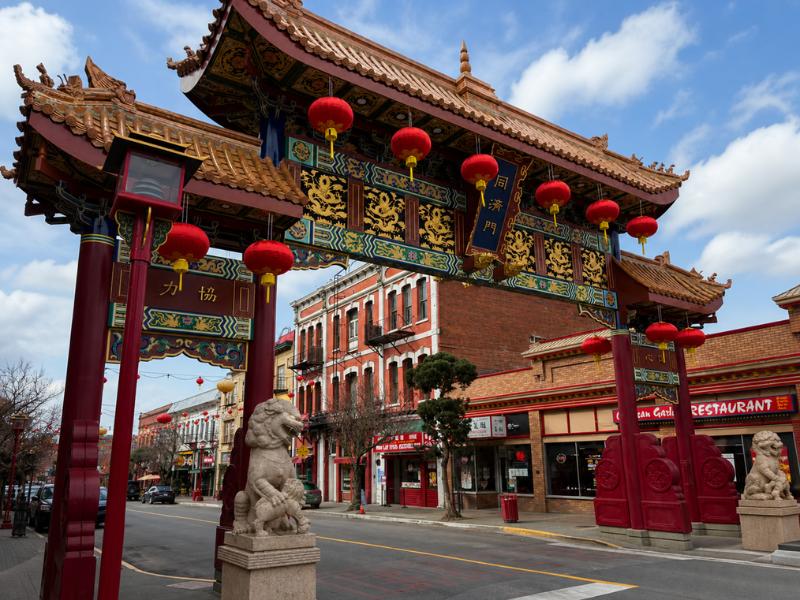
What food is Victoria BC famous for?
Four things, in rough order of how often they get named: seafood pulled from the surrounding coastal waters, Chinatown cooking centred on Fisgard Street and its barbecue pork buns, a dense craft brewing scene for a city this size, and the afternoon tea tradition inherited from the colonial era.
None of those is a single signature dish, which is why the question is harder to answer here than in a city known for one thing. Victoria's food identity is a stack of layers laid down at different times. The Chinatown kitchens date to the Gold Rush era, the tea rooms to the British administrative period, and the breweries and multicultural small-plate places to the last couple of decades.
Eat across all four and you get the real picture. Eat only the tea and you get a postcard.
Why is Chinatown at the centre of the food story?
Because it is the oldest Chinatown in Canada and it never became a museum piece. Fisgard Street still runs on working kitchens rather than souvenir shops, with storefronts dating to the late 1850s and Fan Tan Alley, the narrowest thoroughfare in the country, threading between them.
The dish people come back for is the warm barbecue pork bun, and it is genuinely the most-mentioned bite in the city. Around it sit the hidden courtyards and tucked-away kitchens that most visitors walk past because the entrances do not look like entrances. That is the actual barrier here: the good stuff is not on the main frontage.
Two guided walks solve that problem in different ways. The Victoria foodie history walk pairs the tastings with the city's origin story, while the Chinatown and Old Town tasting tour goes deeper into the alleys and courtyards themselves.
How multicultural is the food scene really?
More than the tea-and-crumpets image suggests. A single two-hour walk through Chinatown and Old Town takes in seven tasting stops that range across South Indian, Thai, Filipino, French and Mexican kitchens, most of them small independent operations rather than restaurant-group outposts.
That mix is concentrated in a small area, which is the useful part for a visitor. The Chinatown and Old Town route starts at a Mexican nixtamal kitchen on Fisgard Street, works through the alleys, and ends up at Market Square, a restored courtyard of old brick buildings that now houses food and drink rather than warehouses.
For anyone eating independently, the practical advice is to stay inside the Old Town and Chinatown grid rather than drifting toward the harbour front, where prices climb and the cooking gets more generic. The compact scale that makes Victoria easy to explore, covered in the best way to get around Victoria, works in your favour at mealtimes too.
Is Victoria actually a craft beer town?
Yes, and it is not a marketing claim bolted on after the fact. The brewing scene is dense enough that food tours use tasting rooms as start and finish points, with the foodie history walk beginning inside a brewing tasting room and the Chinatown route ending at a downtown brewery near Market Square.
If you'd rather compare the full lineup first, Victoria BC Tours groups every tour by Best Selling, Nature and Food on one page.
Beer sits alongside the food rather than competing with it, which is unusual. A brewery here is as likely to be the first stop on a culinary walk as the last stop on a night out. That works well for visitors who want a drink with an early dinner rather than a full evening out.
If drinking is more the point than eating, Victoria's harbour setting gives it an option most cities cannot offer, and we cover the evening version of that in things to do in Victoria at night.
What about afternoon tea and the British side?
Afternoon tea is the city's most famous food ritual and its most polarising. It comes from Victoria's colonial past and its long-running identity as the most British city in Canada, it is served in the grand harbourfront hotels, and it costs several times what a full meal costs elsewhere in town.
Whether to do it is a values question, not a food question. The tea is a piece of the city's self-image, and the setting on the Inner Harbour is genuinely handsome. It is also the single easiest way to spend a large amount of money on a small amount of food while in Victoria.
A reasonable compromise: keep the harbourfront for the architecture and the walk, which costs nothing at all, and spend the food budget in Chinatown. Our free things to do in Victoria guide covers the harbour circuit, and what Victoria is best known for explains where the British-city reputation came from.
Which food tour makes more sense?
Take the foodie history walk if you want the city's story alongside lunch-sized tastings and the classic sights. Take the Chinatown and Old Town route if you already know the highlights and want seven stops through alleys, courtyards and kitchens you would never find on your own.
| Foodie history walk | Chinatown & Old Town tastings | |
|---|---|---|
| From | Around $86 | Around $96 |
| Length | 2 hours | 2 hours |
| Rating | 5.0, over 20,700 booked | 4.8, over 790 booked |
| Route | Parliament Buildings, Inner Harbour, Fan Tan Alley, Public Market | Fisgard Street, hidden alleys and courtyards, Market Square |
| Food | Tastings that add up to a full lunch | Seven tasting stops across several cuisines |
| Best for | First-time visitors | Repeat visitors and keen eaters |
Both offer scheduled departures; check your actual date before planning lunch around the tour. Either one also anchors a first afternoon nicely if you are following our 2 and 3 day Victoria itinerary, and both start within easy reach of the landmarks listed in the top 10 places to visit in Victoria.